
· Nutrition · 5 min read
Which Snack Has the Fewest Calories? Every ANNALALA Product Compared
Calories and sodium per pack for nine ANNALALA products, converted from their lab reports — plus something easy to miss: fewest calories does not mean lightest.
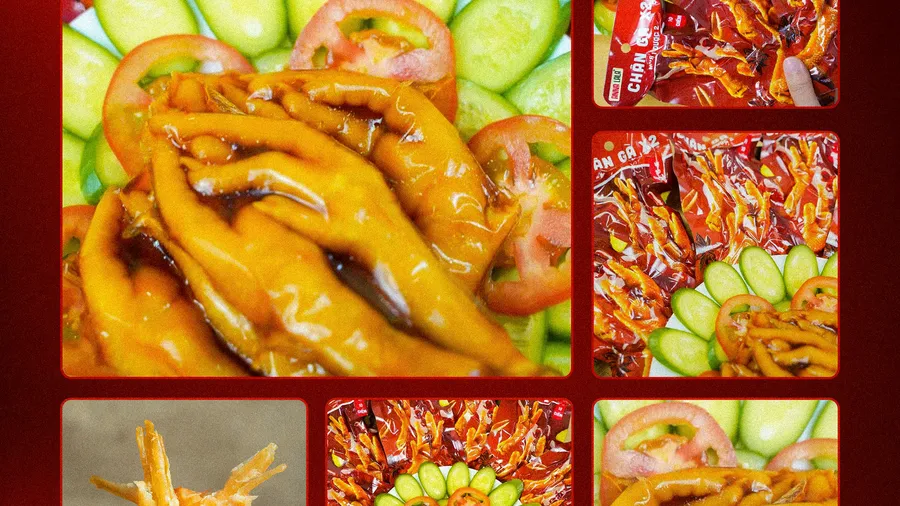
If you’re choosing a snack by its calorie count, here is the full table — every ANNALALA product that publishes enough data, ordered from the lightest.
But there’s a second point here, and to my mind it’s the one worth reading: the lowest-calorie item isn’t the “lightest” one. Those two things don’t travel together, and laying the whole range side by side makes that obvious.
Per-pack comparison
| Product | Weight | Calories | Sodium |
|---|---|---|---|
| Boneless chicken feet | 26g | 35 kcal | 286 mg |
| Thai sauce chicken feet | 26g | 40–41 kcal | 193–196 mg |
| Marinated chicken feet | 45g | 66 kcal | 471 mg |
| Lava mochi | 45g | 168–170 kcal | 30–53 mg |
| Sunflower seeds (30g kernels) | — | 180 kcal | 191 mg |
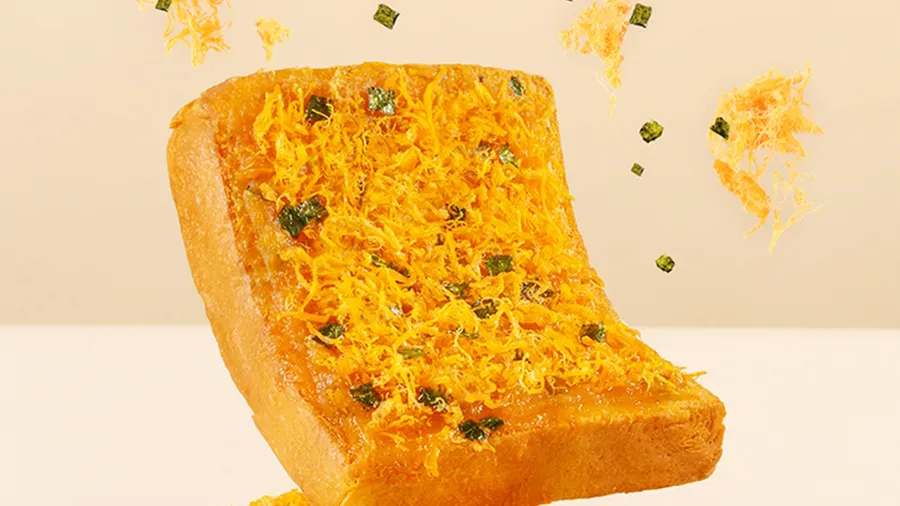
| Seaweed meat floss bread | ~57g | 210 kcal | 194 mg |
| Swiss roll | 80g | 298–303 kcal | 258–278 mg |
All figures are converted from the published per-100g panels using the net weight on the pack. Sunflower seeds are the exception: they’re given for a 30g portion of kernels, not the 500g bag, for the reasons set out in how many calories are in sunflower seeds.
Why compare per pack rather than per 100g?
Because nobody eats exactly 100g.
Nutrition panels are always published per 100g — that’s the standard, and it makes products comparable. But it misleads as soon as pack sizes differ widely.
The clearest example in this range:
| Per 100g | Per pack | |
|---|---|---|
| Marinated chicken feet | 147 kcal | 66 kcal (45g pack) |
| Lava mochi | 372 kcal | 168 kcal (45g piece) |
By the 100g column, the mochi looks 2.5 times heavier. By the per-pack column it still is — because these two happen to weigh the same. But compare boneless chicken feet (26g) against a Swiss roll (80g) and the real gap is more than eightfold, where the 100g column shows less than three.
What you actually consume depends on the pack, not on 100g.

The part people miss: calories and sodium run opposite
This is what makes the whole-range view worth doing. Converted into shares of the daily guidelines (2,000 kcal, and under 2,000 mg of sodium per WHO):
| Product | % of daily energy | % of daily sodium |
|---|---|---|
| Boneless chicken feet | 2% | 14% |
| Thai sauce chicken feet | 2% | 10% |
| Marinated chicken feet | 3% | 24% |
| Lava mochi | 8–9% | 1–3% |
| Sunflower seeds (30g) | 9% | 10% |
| Seaweed meat floss bread | 10% | 10% |
| Swiss roll | 15% | 13–14% |
Put those two columns together and the pattern jumps out:
The savoury range — very low in calories, high in sodium. A pack of marinated chicken feet is only 3% of a day’s energy but takes nearly a quarter of the sodium allowance. Eat three and the calories still haven’t matched one Swiss roll, while sodium has passed 70% of the daily guideline.
The sweet range — higher in calories, very low in sodium. A lava mochi carries 2.5 times the calories of marinated chicken feet but about one fifteenth the sodium.
So “which is lighter” has no single answer. It depends entirely on which number you’re watching.

Choosing by what you’re after
Watching calories → boneless chicken feet (35 kcal) or Thai sauce chicken feet (40–41 kcal). The whole chicken feet range sits under 70 kcal a pack.
Watching salt → lava mochi (30–53 mg). If you want something savoury, Thai sauce chicken feet is the lightest of that group at 41% of the marinated line’s sodium.
Need something filling → Swiss roll (298–303 kcal) or seaweed meat floss bread (210 kcal). These are the only two with enough energy to work as a proper snack-meal.
Most protein per calorie → the chicken feet range. Thai sauce leads at 17–18g per 100g; the detail is in how many calories are in ready-to-eat chicken feet.
Snacking while doing something else → sunflower seeds. Cracking the shells slows you down, which makes it easier to stop.
Three products not in the table
For completeness, these three don’t yet publish enough to convert:
| Product | What’s missing |
|---|---|
| X2 chicken feet | Has a nutrition panel (145 kcal, 983 mg sodium per 100g) but no net weight |
| Cream-filled bread | Has a nutrition panel (354–370 kcal per 100g) but no net weight |
| Vegetarian meat | Has a weight (8g) but no nutrition panel |
For the first two you can convert it yourself from the weight printed on the pack: take the per-100g figure, multiply by the weight, divide by 100.
A few caveats
These are per-pack figures, not per sitting. Eat two packs and double them. The table only helps if you actually eat by the pack.
For savoury items, sodium deserves more attention than calories. As the table shows, an extra pack of chicken feet barely moves the calorie count but moves sodium quickly.
There’s tolerance in the numbers. Net weights are declared with a margin (±3g, ±5g), so the converted figures are averages rather than exact values.
Source: every figure comes from the lab report for its product line, published on the Certificates page.
Frequently asked questions
Which snack has the fewest calories? Boneless chicken feet at 26g, roughly 35 kcal a pack — under 2% of an adult’s daily energy needs.
Which has the least salt? Lava mochi, at just 30–53 mg of sodium per piece, or 1–3% of the daily guideline.
Which has the most calories? The 80g Swiss roll at roughly 298–303 kcal — largely because it’s also the heaviest pack.
Are chicken feet lower in calories than the cakes? Yes, by a wide margin. But they’re far higher in sodium, so “fewer calories” doesn’t mean better on every measure.
Why does a 45g mochi have 2.5 times the calories of 45g of chicken feet? Different composition. Chicken feet are mostly protein and water; mochi is starch, sugar and fat — all far more energy-dense.