
· Life Hacks · 5 min read
Why Sunflower Seeds Go Rancid or Lose Their Crunch
Rancidity and going soft are two different problems with two different causes. What happens, and how to store a 500g bag of sunflower seeds properly.
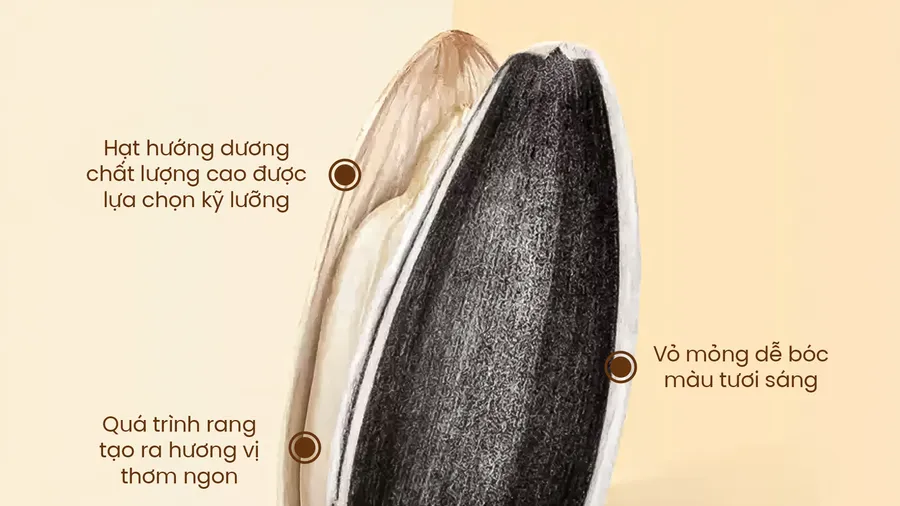
Leave an open bag of sunflower seeds for a few weeks and one of two things tends to happen: they turn bitter with a stale oil smell, or they go soft and chewy with no crunch left.
They sound similar, but these are two entirely different problems with different causes — and different ways to avoid them. Understanding which is which is what keeps a 500g bag good down to the last seed.
Problem 1: rancidity
This is a fat problem, and it stems from the very thing that makes sunflower seeds taste good.
Look at the nutrition panel for Lao Jie Kou sunflower seeds: fat accounts for 46.3g per 100g of kernels — nearly half the weight. Sunflower seeds are an oilseed, and most of that fat is unsaturated.
Unsaturated fats contain double bonds in their molecules. Those bonds react readily with oxygen in the air, producing new compounds with unpleasant smells and flavours — stale oil, something like paint, a bitter aftertaste. The process is called oxidative rancidity.
Three things speed it up:
- Oxygen — every time the bag is open, air gets in
- Heat — chemical reactions all run faster when warm
- Light — direct sunlight especially
Now look at the storage instruction printed on the pack: “somewhere dry, shaded and well ventilated, away from damp, high temperatures and direct sunlight.” That isn’t boilerplate — it lists each of those factors precisely.

Problem 2: losing the crunch
This one is about moisture, and has nothing to do with the fat.
Roasted sunflower seeds are very dry. Anything dry tends to draw moisture out of the surrounding air until the two balance out. In Vietnam, where ambient humidity is usually high, that happens fairly quickly — especially during the humid spring months.
Once the kernel has taken up enough moisture, its crisp internal structure softens. The seed goes from snapping cleanly to chewy and limp. The flavour is unchanged; the texture is gone.
That is why the storage instruction has a separate clause about damp, alongside the one about heat and sunlight.
| Rancidity | Going soft | |
|---|---|---|
| Cause | Oxygen reacting with the fat | Kernels absorbing air moisture |
| Driven by | Air, heat, light | Humidity |
| Signs | Stale oil smell, bitter aftertaste | Chewy, limp, no snap |
| Still edible? | Don’t eat them | Edible, just disappointing |
The distinction matters: soft seeds are merely dull, while rancid ones should go in the bin.
Why the zip seal matters more than you’d think
The product comes in a resealable zip bag, and for a 500g pack that isn’t decoration.
Nobody finishes 500g in one sitting. The bag will be opened and closed many times over several weeks — and every opening lets in humid air. The zip solves both problems at once: it keeps oxygen out to slow rancidity, and moisture out to preserve the crunch.
The 270-day (nine-month) shelf life printed on the pack applies to an unopened bag. Once opened the clock runs considerably faster, and how fast depends on how well you reseal it.
A small trick that works: press the air out of the bag before closing the zip. The less air left inside, the less oxygen there is to react.

Storing them properly
As the pack directs: somewhere dry, shaded and well ventilated. Away from damp, high temperatures and direct sun.
In practical terms:
- Not near the stove. That area is both hot and steamy — it hits two of the factors at once.
- Not on a sunny windowsill. Direct sun heats the bag and accelerates oxidation.
- Not in the car. A boot can get extremely hot in summer.
- Reseal after every sitting, rather than leaving the bag open all evening.
On refrigerating them: the pack calls for a dry, shaded spot and doesn’t ask for chilling. If you do want to refrigerate, be aware of one trade-off: each time a cold bag comes out, moisture in the air condenses on the bag and the seeds — so you avoid rancidity but invite the dampness that softens them. If you go that route, seal tightly and let the bag reach room temperature before opening it.
How to check before eating a handful
A good habit: open the bag and smell it first.
- Normal nutty, toasty aroma → fine
- Stale oil, slightly sharp, a bit like paint → rancid, bin it
- One seed tastes bitter at the back of the tongue → rancid, even if the smell isn’t obvious yet
That bitterness often shows up before the smell is strong enough to notice, so if a seed tastes unusually bitter, don’t carry on through the handful.
The general rule holds as everywhere else: if in doubt, throw it out — the same approach set out in storing ready-to-eat chicken feet.
Frequently asked questions
Why do my sunflower seeds taste bitter? Usually a sign the fat has oxidised after exposure to air, heat or light. Don’t carry on eating them.
Are soft, chewy seeds safe to eat? Yes — that’s a texture problem caused by absorbed moisture, not a safety one. They’re simply no longer enjoyable.
Why do sunflower seeds go rancid faster than some other nuts? Because of their high fat content — 46.3g per 100g of kernels — most of it unsaturated, which reacts with oxygen more readily than saturated fat does.
How long do they keep once opened? The pack gives no separate figure for an opened bag; the 270 days applies to an unopened one. Reseal the zip after every sitting and finish them within a reasonable time.
Should I decant them into an airtight container instead? You can, as long as it genuinely seals. The principle is unchanged: the less air and moisture reach the seeds, the longer they last.