
· Life Hacks · 5 min read
What Is Mochi, and Why Does It Stretch?
Mochi stretches because of one property of glutinous rice starch. How it works, plus the per-piece nutrition figures for ANNALALA lava mochi.
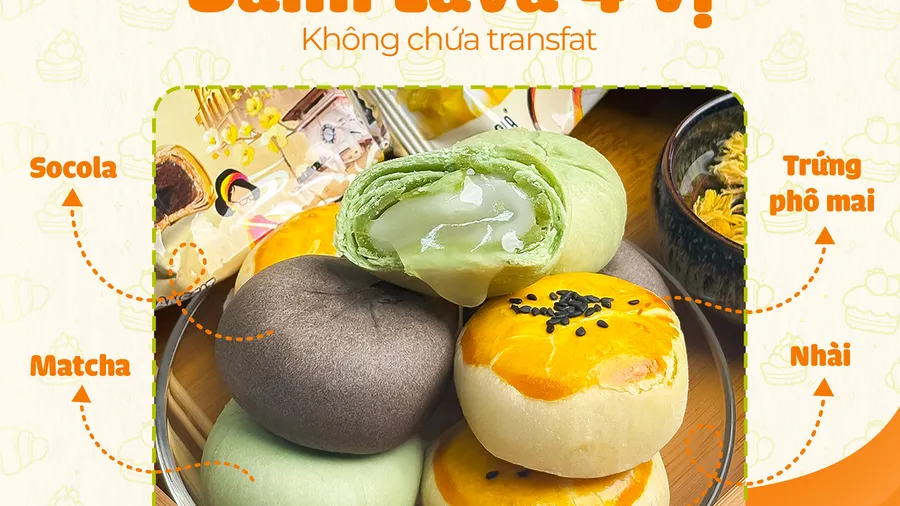
Bite into a mochi cake, pull it away, and the dough follows in long strands. Both it and bread are made of starch, yet bread tears cleanly while mochi stretches like soft toffee.
The difference comes down to one kind of starch, and the reason is rather interesting.
What is mochi?
Mochi is a traditional Japanese confection, originally made by steaming glutinous rice and pounding it until it becomes a dense, elastic mass. In manufactured products the mochi layer is usually made from glutinous rice flour blended with starch, which gives a similar texture at scale.
What both approaches share is the glutinous rice. That is the whole point.
Why is glutinous rice sticky when ordinary rice isn’t?
The starch in a grain of rice is made of two kinds of molecule, and the ratio between them decides the texture entirely:
Amylose — long, largely unbranched chains. As it cools, those straight chains line up neatly against each other into a tight structure, which is what makes rice go dry and separate and bread go firm.
Amylopectin — heavily branched, more like a bush than a chain. All those branches get tangled with one another instead of packing neatly, producing a sticky, chewy, elastic texture.
| Rice | Amylopectin | Cooked texture |
|---|---|---|
| Ordinary rice | roughly 70–85% | Separate, fluffy grains |
| Glutinous rice | almost all of it | Sticky, chewy, stretches into strands |
Glutinous rice contains essentially no amylose. With no straight chains to pack tightly, the starch is nothing but tangled branched clusters — and when you pull, they slide past each other rather than snapping. Those are the strands you see.

Reading the mochi layer off the label
On the ingredient list for lava mochi, the mochi layer accounts for 26.5% of the cake and consists of four things:
| Ingredient | Role |
|---|---|
| Glutinous rice flour | The source of amylopectin — what creates the chew and the stretch |
| Modified starch | Stabilises the texture and keeps it consistent between batches |
| Maltose syrup | Adds mild sweetness and helps hold moisture in the layer |
| Black sesame | Aroma and flavour accent |
The filling makes up 28.5% and the outer shell uses 20% wheat flour. So the mochi layer and the filling together are more than half the cake.
Why doesn’t packaged mochi go hard?
This is a genuine problem in the trade. Freshly pounded mochi starts to skin over within hours and is firm by the next day — that is starch retrogradation, the same process covered in why packaged bread lasts 120 days.
Amylopectin retrogrades far more slowly than amylose, so mochi starts with an advantage. Not enough for a 120-day shelf life, though, which is why the list also carries:
- Trehalose — a moisture-retaining sugar, present in all four of ANNALALA’s bakery lines
- Humectant (INS 420(i)) — sorbitol, which holds water inside the layer
Both keep water bound within the starch structure, so the mochi stays soft for weeks instead of drying out.
The per-piece figures
Each cake weighs 45g, so converting the published per-100g panel to a single piece is straightforward:
| Egg & cheese | Chocolate | |
|---|---|---|
| Energy | 170 kcal | 168 kcal |
| Protein | 2.2 g | 2.1 g |
| Fat | 5.9 g | 5.4 g |
| Trans fat | 0 g | 0 g |
| Carbohydrate | 26.9 g | 27.4 g |
| Total sugars | 6.2 g | 5.1 g |
| Sodium | 30 mg | 53 mg |
Two figures stand out:
Sodium is very low. Just 30–53 mg per piece, or roughly 1.5–2.7% of the WHO daily guideline of under 2,000 mg. For comparison, a 45g pack of marinated chicken feet contains about 471 mg — nearly ten times as much. That is the natural difference between a sweet snack and a savoury one.
Carbohydrate dominates. Around 27 g per piece, which is what you would expect from something built on glutinous rice and wheat flour. Only 5–6 g of that is sugar; the rest is starch.
Getting the best out of it
- Warm it gently. Heat loosens the starch again and makes the mochi layer stretch much further. It is why warm mochi is always chewier than cold.
- Don’t leave it in the fridge. Chiller temperatures are where starch retrogrades fastest — faster than at room temperature. Mochi kept in the fridge firms up sooner.
- Pull slowly. The strands need a moment for the starch chains to slide past one another. Pull too fast and it simply snaps.
Frequently asked questions
What is mochi made from? Traditionally, steamed glutinous rice pounded into a paste. The mochi layer in manufactured cakes is usually glutinous rice flour blended with modified starch and maltose syrup.
Why does mochi stretch? Because glutinous rice starch is almost entirely amylopectin — a heavily branched molecule whose tangled clusters slide past each other when pulled rather than breaking.
How many calories are in one lava mochi cake? About 168–170 kcal per 45g piece, depending on the flavour.
Is mochi high in salt? Very low — roughly 30–53 mg of sodium per piece, under 3% of the daily guideline.
Why does mochi harden in the fridge? Chiller temperatures accelerate starch retrogradation. Store at room temperature somewhere dry and cool, as the pack directs.
What is the difference between mochi and “stretchy” mochi? They are the same thing. “Stretchy” simply describes how elastic the layer is when it is chewy enough — the result of a high amylopectin ratio and well-retained moisture.