
· Life Hacks · 5 min read
Why Doesn't a Swiss Roll Crack When You Roll It?
Rolling a sheet of cake without it breaking is harder than it looks. What the egg ratio does, plus per-piece nutrition for ANNALALA Swiss rolls.
Try rolling up a slice of sandwich bread. It snaps across the middle.
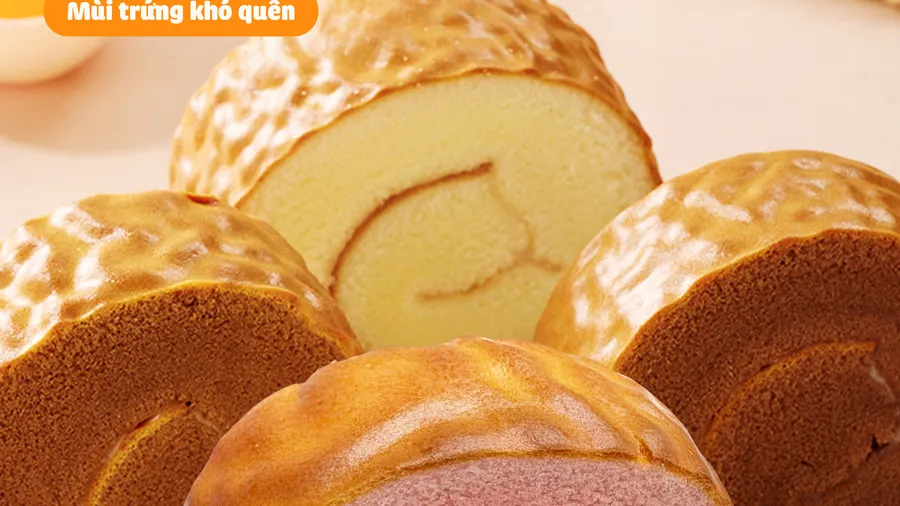
A Swiss roll, though, turns a full revolution with the filling tucked neatly inside and no cracks across the surface. Both are baked from wheat flour and egg, so why does one break while the other bends?
The answer is the ratio between egg and flour, and it’s printed on the pack.
The number that decides it: egg at ≥45%
On the ingredient list for the Swiss roll, the first two lines tell most of the story:
| Ingredient | Share |
|---|---|
| Egg (white & yolk) | ≥45% |
| Wheat flour | ≥15% |
Egg makes up nearly half the weight, while flour is about a third of the egg content. For contrast, the same brand’s cream-filled bread runs wheat flour at ≥40% — the ratio reversed.
That inversion is what produces two baked goods with completely different behaviour.
Flour makes cake rigid; egg makes it supple
Flour brings gluten. Mixed with water and worked, the proteins in wheat flour link into a gluten network — tough, elastic, good under load. That’s what lets a loaf hold its shape and tear into strands. But once baked, that same network is what makes the crumb firm and liable to snap when bent.
Egg works differently. It does three jobs at once:
- It traps air. Whipped egg white holds a great deal of air. In the oven, heat sets the protein around those bubbles and fixes them as a fine, open crumb.
- It builds a softer frame. Egg protein coagulates into a structure that holds the cake’s shape without the rigidity of a gluten network.
- It carries moisture. An egg is around three-quarters water, so an egg-heavy formula starts out moist.
The result is a sheet that is aerated, moist and low in gluten — the three conditions for bending without breaking.

Why dry cake cracks
Cracking while rolling is almost always a moisture problem rather than a technique one.
As the crumb dries, the walls between the air pockets turn brittle. Bending the sheet means the outer face has to stretch further than the inner one — and if those walls are no longer supple enough to stretch, they fail, and the failures show up as a crack.
That’s why bakers roll the cake while it’s still warm, with steam left in the crumb. Let it cool completely first and the crack rate climbs sharply.
A packaged cake faces a harder version of the same problem: it has to stay that supple for 120 days. The ingredient list includes trehalose, the moisture-retaining sugar covered in why packaged bread lasts 120 days. It keeps water bound inside the structure, so the sheet doesn’t dry out and split while it sits on the shelf.
One thing worth stating plainly
Egg isn’t the only thing aerating this cake. The ingredient list says “emulsifiers and raising agents meeting international standards” — so the product does use raising agents, declared generically rather than code by code.
That means you shouldn’t read it as a cake leavened by egg alone. The full, legally binding list is the one printed on the pack; the original lab reports are published on the Certificates page.
The per-piece figures
Each cake weighs 80g. Converting the published per-100g panel:
| Strawberry & chocolate | Cheese | |
|---|---|---|
| Energy | 298 kcal | 303 kcal |
| Protein | 5.8 g | 5.8 g |
| Fat | 14.0 g | 15.4 g |
| Trans fat | 0 g | 0 g |
| Carbohydrate | 37.0 g | 35.2 g |
| Sodium | 258 mg | 278 mg |
A few things stand out:
This is the most filling item in the range. At 298–303 kcal a piece it is nearly double a 45g lava mochi (168–170 kcal). Most of that gap is simply size: 80g against 45g.
Fat runs higher than the other bakery lines, at roughly 14–15 g per piece. That follows from an egg-heavy formula with butter and mayonnaise — though trans fat is declared at 0.
Sodium is around 258–278 mg, about 13–14% of the WHO daily guideline. Well above the mochi, but still below a pack of marinated chicken feet (471 mg).
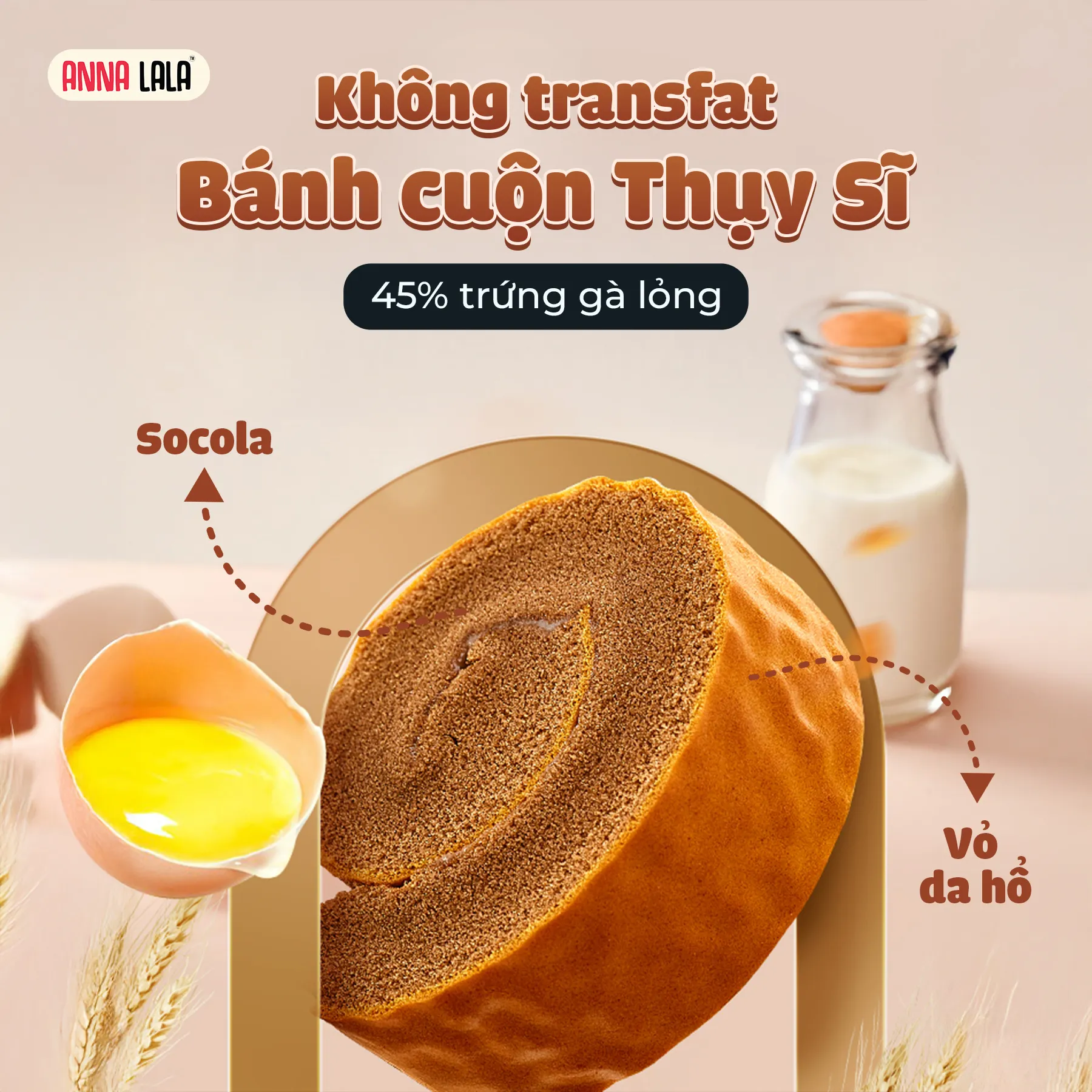
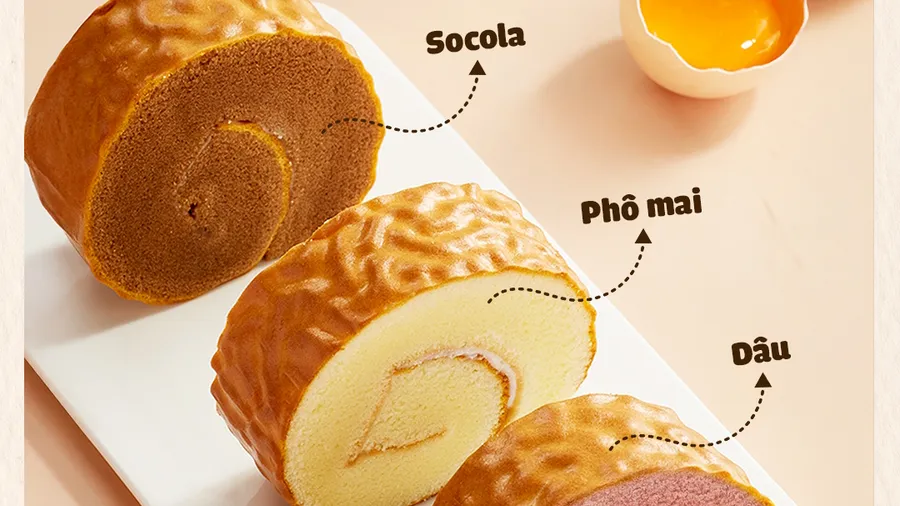
The three flavours and their declaration numbers
| Flavour | Self-declaration number |
|---|---|
| Strawberry | 20/LAKESIDE/2025 |
| Cheese | 18/LAKESIDE/2025 |
| Chocolate | 19/LAKESIDE/2025 |
Strawberry and chocolate share one nutrition panel; cheese has its own, slightly higher in fat and sodium.
Frequently asked questions
Why can a Swiss roll be rolled when bread can’t? Because the ratios are inverted. The Swiss roll is ≥45% egg and only ≥15% flour, so it has little gluten, plenty of trapped air and plenty of moisture — which lets it bend. Bread has far more flour, so its gluten network is firm and snaps when bent.
How many calories are in one Swiss roll? About 298–303 kcal per 80g piece, depending on the flavour.
Why does my homemade roll crack? Usually because the cake has cooled or been slightly over-baked, leaving the crumb dry. Rolling while it is still warm, with steam in the crumb, makes a large difference.
Is 45% egg a lot? Yes. That is close to half the weight of the cake, and it is the main reason this style has its characteristic moist, aerated crumb.
Does it contain preservatives? The published ingredient list doesn’t name any, but it is abbreviated, so that isn’t conclusive. The pack itself is the authoritative source.