
· Life Hacks · 7 min read
Why Instant Eggs Keep at Room Temperature Without Spoiling
A boiled egg goes off in days on the counter; an instant egg does not. The difference is salt, sugar and a sealed pouch — and the sodium column shows it.
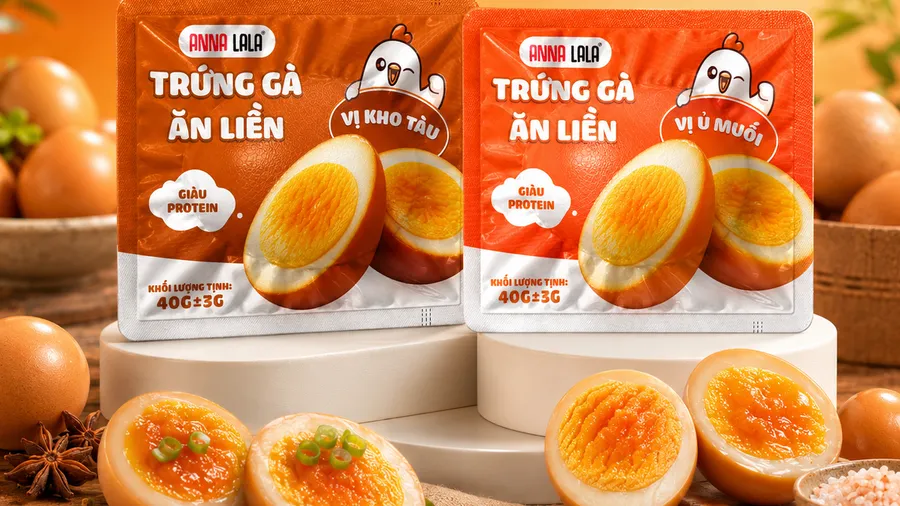
Boil an egg, leave it on the kitchen counter, and within a few days it belongs in the bin. Yet instant chicken eggs are also cooked eggs in a pouch, and the storage line on the pack reads: “store at room temperature, somewhere dry and cool.”
Same egg. So what changed?
The answer isn’t some mysterious additive. It is four things working at once, and you can see the trace of every one of them on the declared panel.
Microbes need water — but not the water you’re picturing
This is the heart of it, and the part most often misread.
Bacteria and moulds need water to live. But they cannot use all the water in a food — only the free water, the portion still able to move about, not held fast by anything else.
An ordinary boiled egg is full of free water. That is why it spoils quickly: anything that lands on it finds an immediate place to multiply.
Now add salt and sugar. Their molecules pull water molecules in and hold them close. The total amount of water in the egg hasn’t changed, but the share of it that remains free drops sharply. To a microbe, the inside becomes a far drier place than its moist appearance suggests.
This is the principle behind salted eggs, dried fish and preserved fruit — methods that long predate refrigeration.
The evidence is in the sodium column
The useful part here is that you needn’t take anyone’s word for it. The declared sodium figures show the salt doing that job.
| Per 100g | Braised flavour | Salted flavour |
|---|---|---|
| Sodium | 792 mg | 1210 mg |
Per 40g egg, that works out at 317 mg for the braised and 484 mg for the salted.
For scale, 484 mg is roughly 24% of the WHO daily sodium guideline — about the same as a pack of marinated chicken feet. That is not a quantity of salt chosen purely to taste salty. It is enough salt to change the living conditions inside the egg.
And the name “salted” describes precisely what happens: the egg steeps in a salt-heavy environment and the salt works its way inward. The savoury taste is the consequence, not the sole purpose.
Sugar is doing the same work, more quietly
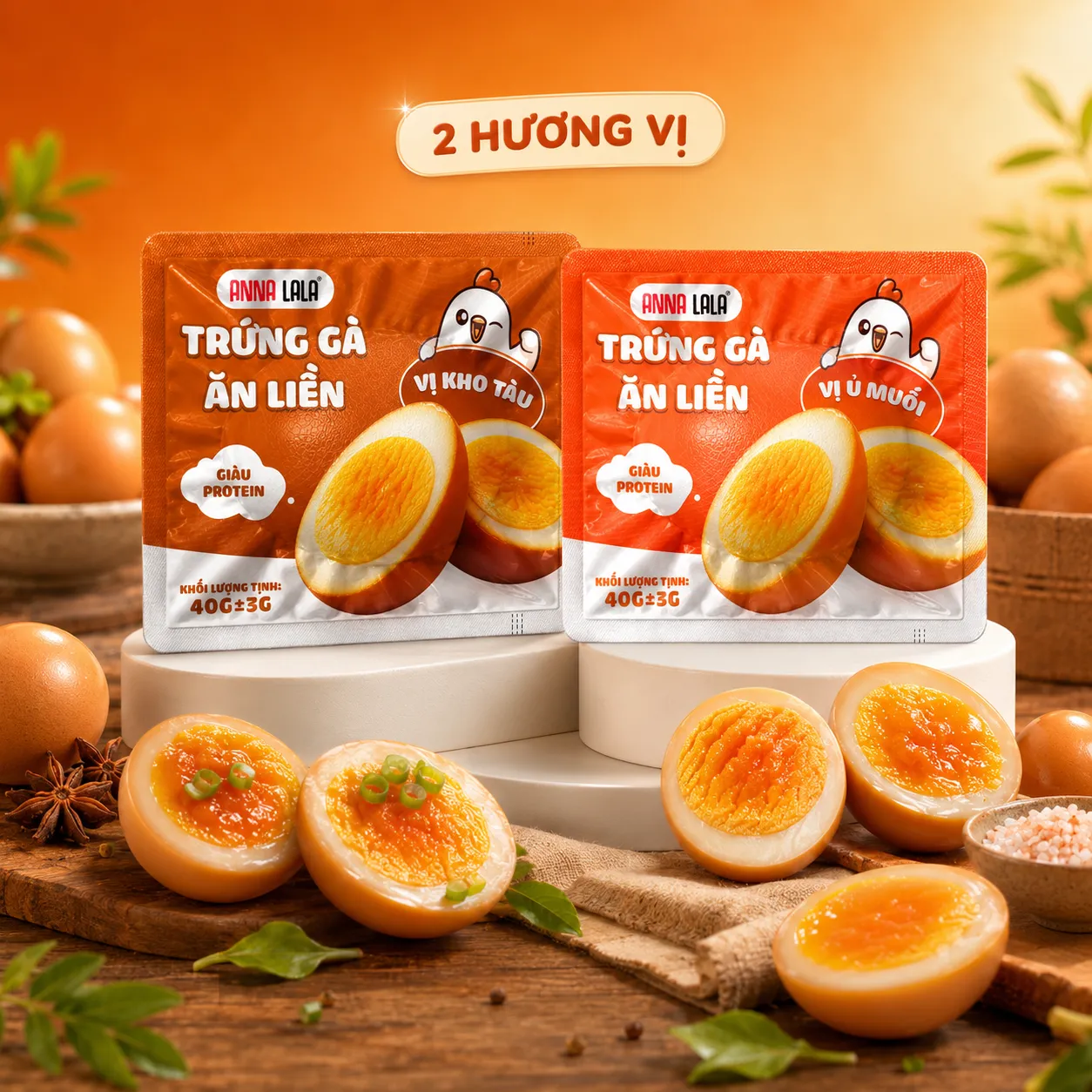
Look again at the ingredient lists for both flavours and you’ll find sugar and maltose syrup fairly high up — ahead of the seasonings.
Most people read past that assuming it is there to round off the taste. But sugar holds water exactly the way salt does. A jar of fruit preserve survives months outside the fridge on no additive at all, simply because there is so much sugar that microbes are left without usable water.
Here the sugar plays both parts: it balances the salt, and it helps hold the water down.
Heat deals with what’s there; the seal deals with what’s coming
Those two steps make the inside hard to live in. Two more handle the rest.
Cooking with heat deals with whatever microbes the egg already carries. The product description sets the process out as “modern sterilisation and closed-loop processing.”
The sealed pouch handles everything afterwards. Sterilise something and leave it open and the air will reseed it within hours. A sealed pack keeps the inside from being recontaminated.
Worth holding on to: these four only work as a set. Without the seal, the heat step means nothing. Without the salt and sugar, a single pinhole is enough. It is the same layered arrangement described in why packaged bread keeps so long.
What about the fat?
Few people think about this, yet it explains an otherwise puzzling line on the ingredient list.
The salted flavour carries 19g of fat per 100g — close to a fifth of its weight, mostly from the yolk. And fat does not spoil because of microbes. It spoils along a completely different route: reacting with oxygen to produce stale-oil smells and a bitter edge. That mechanism is covered in why sunflower seeds go rancid.
Salt and sugar do nothing to stop it, because oxygen has no need of water.
Which is why the list also carries antioxidant INS 316. Its job is to protect the fat from oxidising — a separate problem calling for a separate answer.
While we’re here, one detail that invites confusion: the red yeast rice colouring on the ingredient list is a colourant, giving the egg its red-brown exterior. It is not a preservative and plays no part in how long the product keeps.
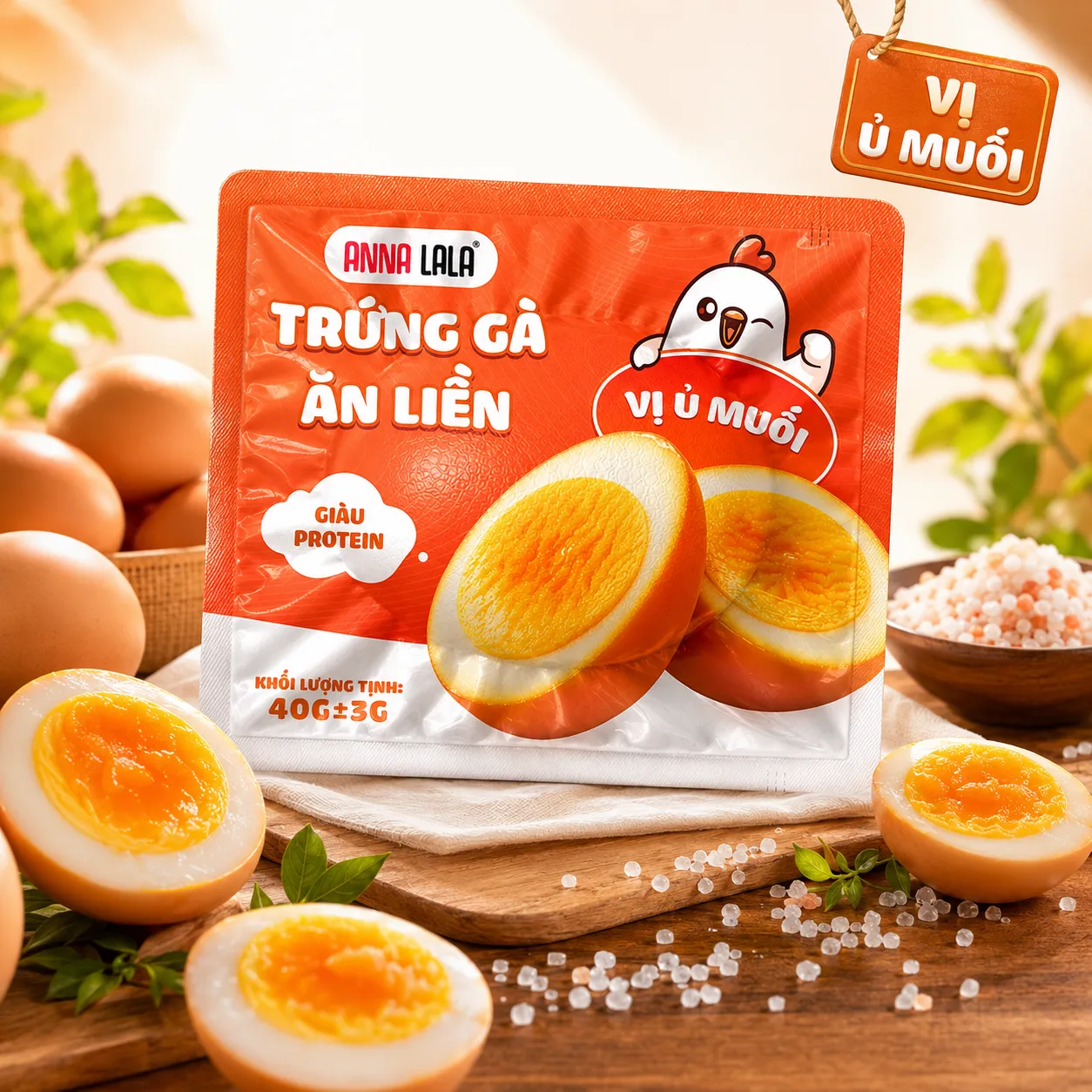
The two flavours side by side
| Per 100g | Braised flavour | Salted flavour |
|---|---|---|
| Energy | 237 kcal | 232 kcal |
| Protein | 18.3 g | 14.2 g |
| Fat | 15.0 g | 19.0 g |
| Carbohydrate | 7.4 g | 1.6 g |
| Total sugars | 4.5 g | 4.5 g |
| Sodium | 792 mg | 1210 mg |
Per 40g egg: roughly 95 kcal braised and 93 kcal salted. The energy gap is negligible; the real differences are in protein, fat and sodium.
One figure doesn’t add up, and it is fairer to say so: for the salted flavour the panel declares 1.6g of carbohydrate but 4.5g of total sugars. Sugars are a subset of carbohydrate, so sugars exceeding total carbohydrate is not possible. One of the two is in error. We quote the declared panel as published rather than silently amending it, but we would not suggest using that pair of numbers for any calculation. The rest of the panel is unaffected.
And once it’s open?
Here it pays to be clear.
The “store at room temperature” instruction applies to an unopened pack. Opening it removes one of the four defences — the barrier against recontamination. The other three remain, but the wall now has a gap in it.
The product is portioned as one egg per sitting, so the sensible approach is to finish whichever one you open. If you do leave part of it, refrigerate it and eat it the same day rather than leaving it out.
As for shelf life, the pack states only that the date is “printed on the packaging” — no fixed figure is published in the product documents, so the number you need is the one on the pack in your hand.
Frequently asked questions
Do instant eggs need refrigerating? Not while sealed. The pack calls for room temperature, somewhere dry and cool, out of direct sun. Once opened, finish it.
Why do they keep longer than an egg boiled at home? Because four things happen at once: salt and sugar tie up the water that microbes need, heat deals with the microbes already present, and a sealed pouch stops new ones arriving. A home-boiled egg has none of the last three.
Does the product contain preservatives? The declared ingredient list names none. It does carry antioxidant INS 316, but that protects the fat from going rancid, which is a different job from suppressing microbes. The keeping quality comes mainly from salt, sugar, heat and the seal.
Are they too salty? The salted flavour runs to about 484 mg of sodium per egg, roughly 24% of the daily guideline; the braised is about 317 mg, or 16%. If you are watching salt, the braised is appreciably lighter.
What is the red-brown colour on the outside? Red yeast rice colouring, declared on both flavours’ ingredient lists. It is there for appearance and has nothing to do with preservation.
Why does the salted flavour carry more fat than the braised? The panel declares 19.0g against 15.0g per 100g. The published ingredient information doesn’t account for the gap, so we report the figures without speculating about the cause.